
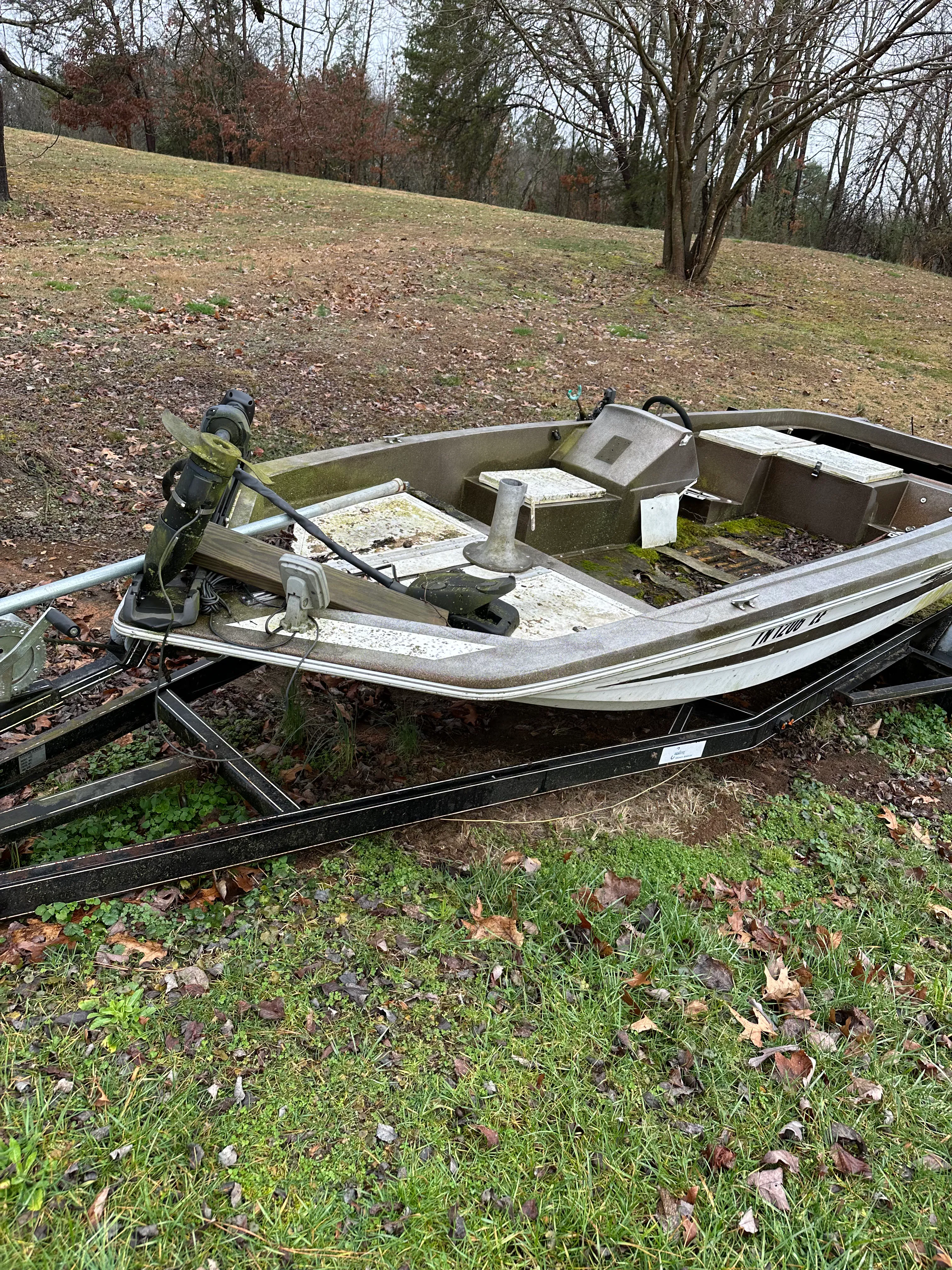
Measure the rig as it stands
Give length, beam and approximate weight or model details. Photograph the tubes, deck and supports from accessible positions. Report visible damage and say whether the craft floats. A compromised tube or deck can affect the proposed handling method; it should be assessed before a loading arrangement is selected.
Separate a trailer transfer from full removal
If you want to keep the trailer, say so before the quote. Ask who supplies the supports and equipment for any transfer and what condition the craft will be left in. If both boat and trailer are leaving, describe the trailer independently. Do not assume an old frame is suitable for towing because the pontoon currently rests on it.
For a dockside craft, identify access control
Explain the present position and identify the marina or property contact. Ask the operator to assess any movement needed before loading onto road transport. Equipment suitability, route requirements and site permission depend on the actual dimensions and proposed work; a wide-load description does not establish that permits are already arranged.
Compare receiving arrangements and possible credits
Metal tubes and other components may be assessed for recovery, but condition and demand determine whether a value offer is available. The deck, contents and remaining materials need their own receiving plan. Ask the quote to identify loading, preparation, transport, destination charges and any agreed credit, including how changes would be handled.
Request an estimate, review listed locations or read the boat removal cost guide.