
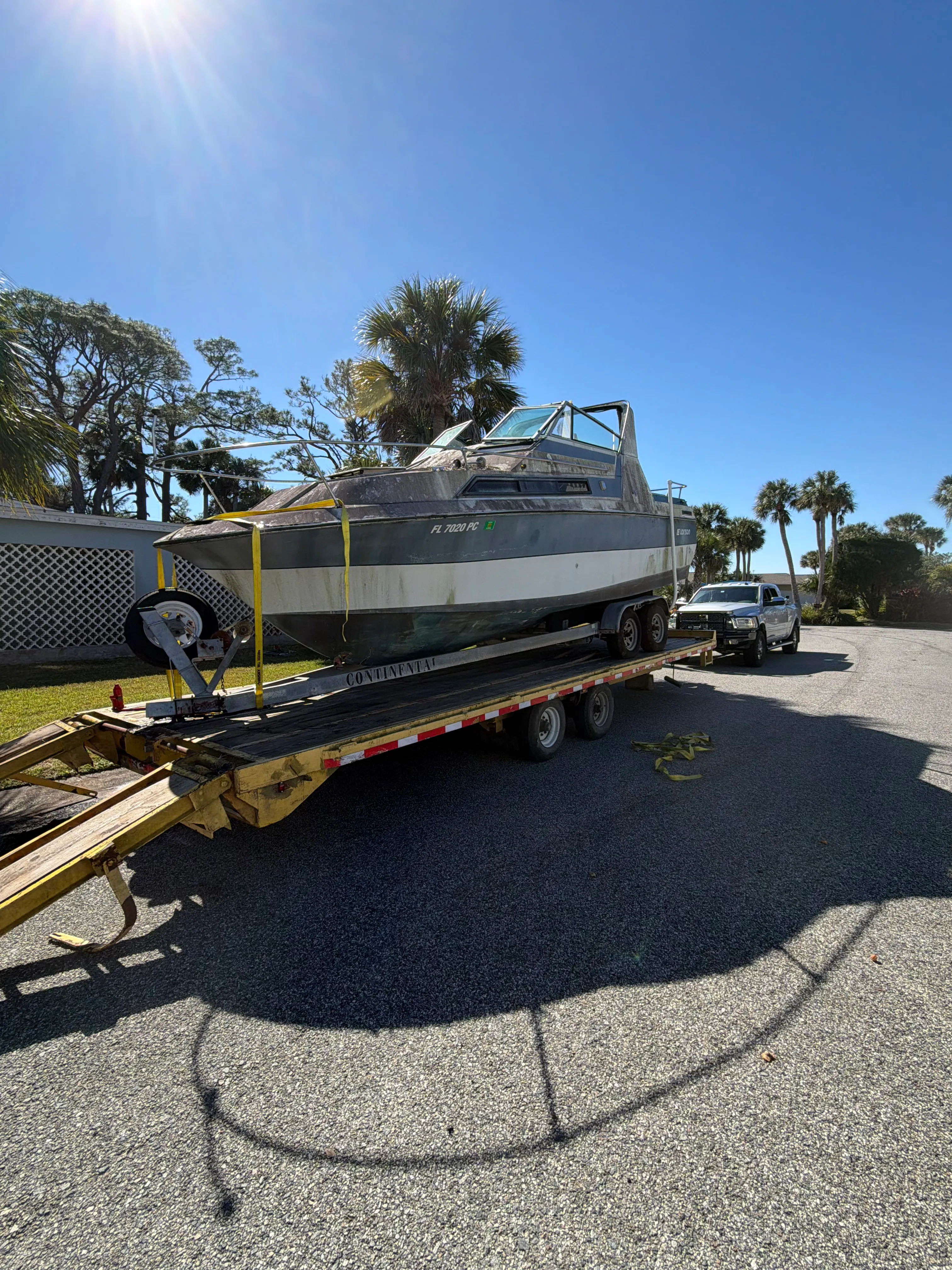
Identify each craft and trailer
For one unit or several, give the make, model and approximate year if known. State whether the hull is damaged, the motor runs and a trailer is included. When several units share a trailer, identify which craft are to leave and which remain. Photograph the supports and access rather than assuming a smaller vessel can be loaded without equipment.
Describe garage, yard or storage access
Include the door or gate opening, room to maneuver and the route to transport. At a storage facility, provide the manager contact and access arrangements. Tell the operator if the craft is on a dolly, blocks or an unusable trailer. Ask what equipment is proposed and whether an on-site assessment is needed before the method is confirmed.
Account for fluids and the hull destination
Explain what is known about fuel, oil, batteries and other contents. Do not drain or dismantle an unstable or damaged craft to complete an enquiry. Ask which preparation is included and which receiver will accept the material. Acceptance of metal components does not establish acceptance of the composite hull.
Agree records, price and appointment
Identify the owner and documents available for each craft and the trailer. Missing records should be discussed before scheduling; no general no-title exemption is assumed here. Compare loading, transport, preparation and receiving charges. Any assessed component value must be individually agreed, and an online enquiry does not reserve a pickup date.
Request an estimate, review listed locations or read the boat removal cost guide.